Only two years ago, optimistic and ambitious forecasts emerged from the Western Balkans region, anticipating the implementation of electricity market coupling by 2026. Unfortunately, these expectations are unlikely to materialise. At present, none of the Energy Community (EnC) Contracting Parties has a confirmed timeline for entry into the single European electricity market.
In the meantime, the Market Coupling Integration Plan—intended as the cornerstone framework for market integration—has yet to be adopted. EnC Contracting Parties are also facing additional challenges, most notably the Carbon Border Adjustment Mechanism (CBAM). The initial impacts of CBAM are already becoming visible in local electricity markets, including reduced liquidity, declining prices, and increased caution towards new green investments. European institutions are closely monitoring these developments and exploring appropriate responses, while consistently highlighting delays in the transposition and implementation of key measures required for market integration.
At the same time, EnC Contracting Parties underline the continued lack of clear guidance and direction from European institutions, which could help accelerate both the implementation of market coupling and the effective application of CBAM. A shift in approach has also recently been observed: the original vision of integrating EnC markets into the single European electricity market is gradually giving way to a more incremental, “border-by-border” approach. This raises important questions as to whether such targeted “micro-solutions” could prove faster and more effective than a broader, multi-border integration model.
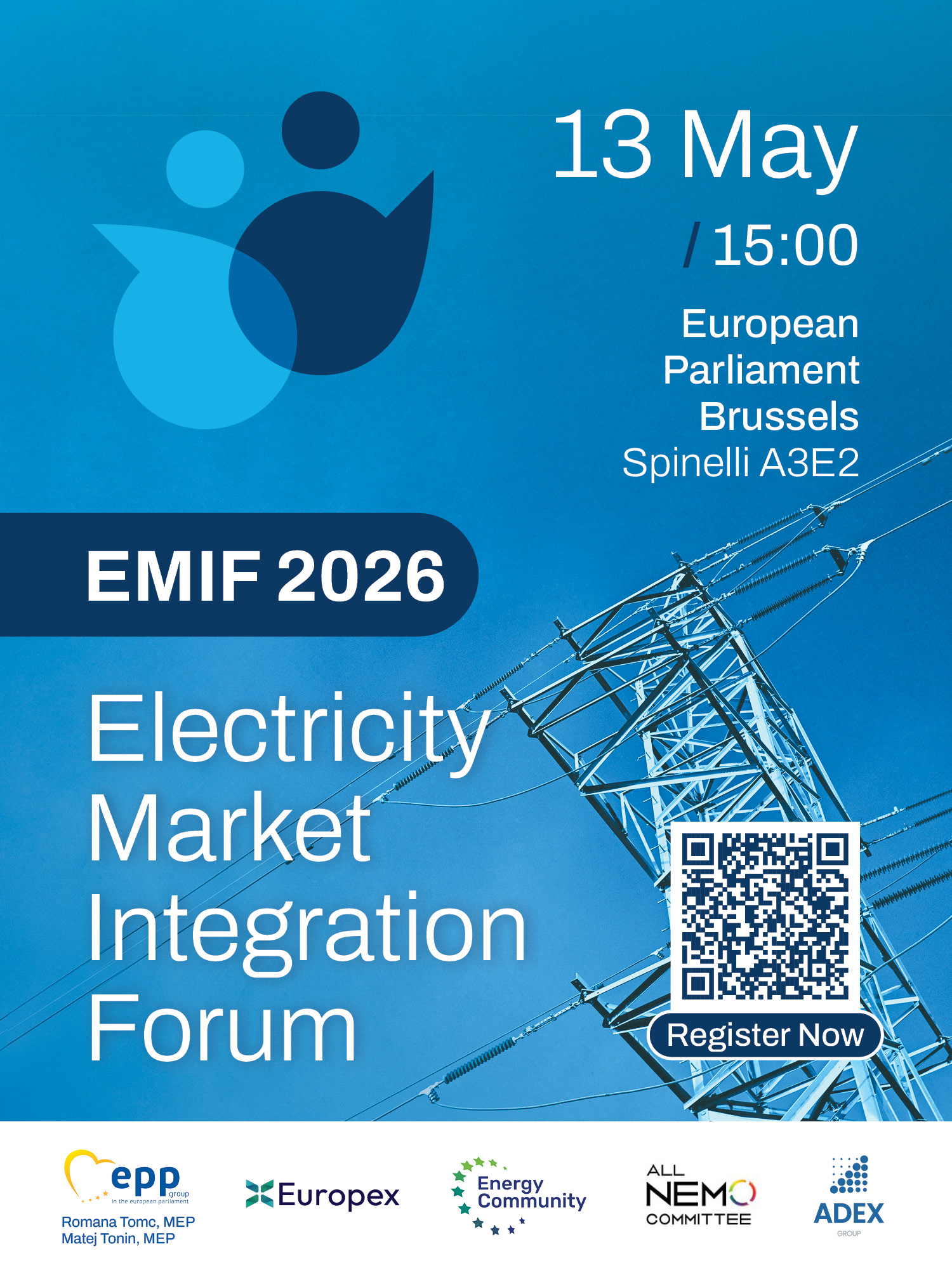
We aim to explore these - and other - questions in depth at EMIF 2026, which will take place on 13 May at 15:00 at the European Parliament in Brussels.
This year’s conference is titled: “Are Market Coupling and CBAM on a Collision Course?”